
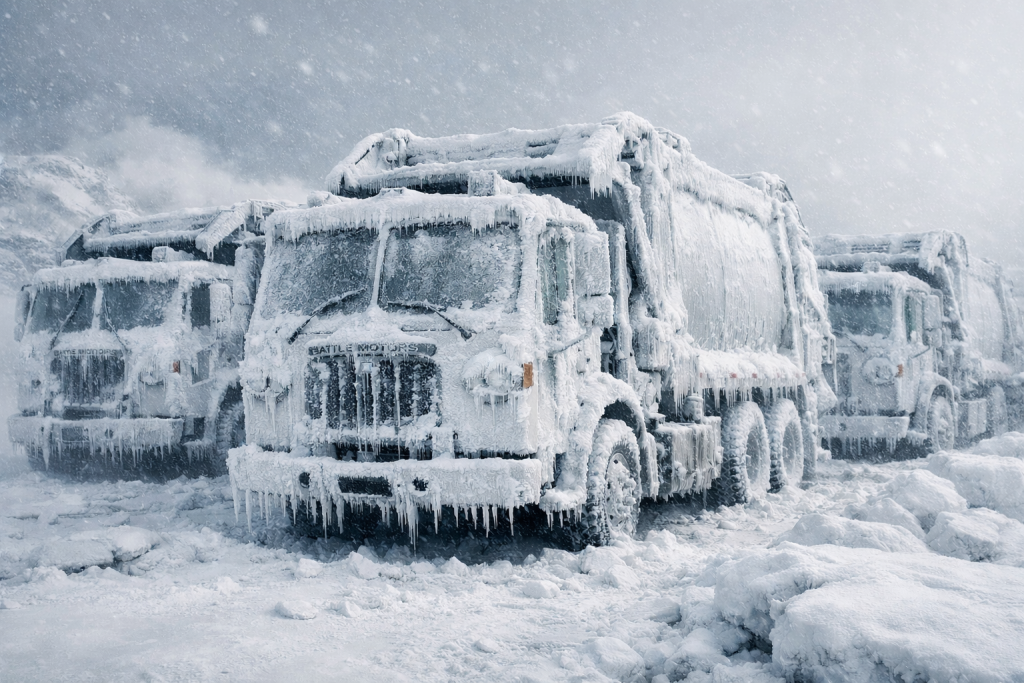
After more than four decades in this industry starting back in 1983 when I was riding routes at 5 AM just to learn the business, I’ve seen plenty of trucks sidelined by cold weather problems that could have been prevented. Hydraulic issues top that list every single winter. This is what 40 years of experience has taught me about cold weather hydraulic maintenance.
Why Cold Weather Hits Hydraulics So Hard
Here’s what I tell every customer who calls in December wondering why their packer is acting sluggish: hydraulic fluid doesn’t like cold any more than you do.
When temperatures drop, that fluid thickens up considerably. I’ve watched operators jump in a truck on a 25-degree morning, fire it up, and immediately start cycling the packer at full speed. That’s asking for trouble. Thick, cold fluid can’t flow through lines and valves the way it needs to. The pump strains to pull fluid that moves like molasses. Pressures spike. Seals that were fine yesterday started weeping because they’re stiff and can’t flex properly.
I learned this lesson the hard way years ago, and I’ve seen the repair bills to prove it, blown hoses, damaged pumps, cylinders that needed rebuilding. All because someone was in a hurry on a cold morning.
What Actually Works
Give Your Truck Time to Wake Up
I know routes are tight and every minute counts. But five to ten minutes of warm-up, followed by running the packer through a few slow, easy cycles before you head out, saves hours of downtime later. Let that fluid circulate and warm up gradually. Your hydraulic system will thank you.
Check Your Fluid Rating
Not all hydraulic fluid handles cold the same way. If you’re running standard fluid and operating in temperatures that regularly dip below freezing, talk to your parts department about a multi-viscosity fluid designed for wider temperature swings. It’s a simple change that makes a real difference.
Watch Your Seals and Hoses
Cold makes rubber stiff and brittle. That small seep that you’ve been ignoring. It’s about to become a real leak when temperatures drop and that hose or seal can’t flex anymore. Winter is when marginal components fail. Walk around your truck and look, really look, for any signs of fluid where it shouldn’t be.
Listen to Your Equipment
After enough years, you develop an ear for what sounds right and what doesn’t. A pump working too hard has a different tone. Cylinders that are starving for fluid don’t move smoothly. If something sounds off on a cold morning, don’t push it. Let it warm up more or get it checked out.
The Real Cost of Skipping This
I’ve sold over 8,400 trucks through RDK since 1997, and I’ve had countless conversations with operators about what went wrong. The pattern is always the same: cold snap hits, someone’s running behind, they skip the warm-up, and by noon they’re on the phone needing emergency service.
A blown hydraulic hose on route doesn’t just mean a repair bill. It means a truck sitting on someone’s street leaking fluid. This also means a route that doesn’t get finished and your other trucks and crews are scrambling to cover. One shortcut in the morning turns into a full day’s headache.
Bottom Line – Cold Weather Hydraulic Maintenance
Treat your hydraulic system with a little extra patience when it’s cold outside. The few minutes you invest in proper warm-up and the attention you pay to fluid condition and component wear will keep your trucks running when you need them most.
That’s not just advice I give, it’s how we’ve operated for nearly 30 years at RDK. Take care of the equipment, and it takes care of you.
Have questions about cold weather hydraulic maintenance or need parts for your fleet? Contact RDK Truck Sales – we’ve been keeping refuse trucks running since 1997.