
Bad DEF Is Cheap Until It Isn't: What's Really in Your Tank
Author
Richard Kemner
Date Published

DEF Systems · Part 1 of 2
Bad DEF Is Cheap Until It Isn't: What's Really in Your Tank

Most DEF problems don't start in the truck. They start in a drum sitting behind the shop in July.
That's the part nobody wants to hear, because it means the expensive parts failure you just paid for was probably preventable — and probably caused by a purchasing decision or a storage habit, not by bad luck.
Here's what DEF actually is, what goes wrong with it, and the one cause behind most of it.
What DEF is, and why one number matters
Start with the blue cap. On every modern diesel there's a second, smaller filler next to the diesel fill, capped in blue. That's where the blue fluid goes — diesel exhaust fluid, sprayed into the exhaust stream to convert NOx into nitrogen and water. Green nozzle, big hole, diesel. Blue cap, small hole, DEF. Never interchangeable, and the small hole is small on purpose.
DEF is not a mystery chemical. It is 32.5% urea and 67.5% deionized water, held to a global standard called ISO 22241.
That number is the whole ballgame. The truck's emissions system is calibrated around 32.5%. It doses fluid, measures the result, and expects the chemistry to behave. Drift off that number in either direction — too weak, too strong, or contaminated — and the system knows, sets a code, and starts limiting the truck.
So the real question isn't "did I put DEF in the tank." It's "was it still 32.5% when it got there."

The main cause: heat and time
If you take one thing from this article, take this. The single biggest cause of off-spec DEF is heat. Not dirt, not water, not counterfeit product — heat.
DEF has no fixed expiration date. Its shelf life is a function of storage temperature, and ISO 22241 puts hard numbers on it:
| Constant storage temperature | Minimum shelf life |
|---|---|
| ≤ 50°F | 36 months |
| ≤ 77°F | 18 months |
| ≤ 86°F | 12 months |
| ≤ 95°F | 6 months |
| > 95°F | Test before use |
Source: American Petroleum Institute and mtu Solutions
Read that table against a Florida summer. A tote in an unshaded yard is not on an 18-month clock — it's on the 6-month clock or worse. As a rule of thumb, every 10°C above the ideal range roughly halves the remaining shelf life (DEF Sales). The practical guidance from the field is that DEF stored at 86°F or higher should be considered questionable after about 12 months (Fleet Maintenance).
The same applies in the truck. DEF sitting in a tank under a hot chassis degrades on the same curve, so in hot climates plan on using in-tank fluid within a few months rather than a year (NüDef).
The sneaky version: a loose lid
Heat has a partner. DEF left in a partially full container with a loose bung loses water first, because water evaporates and urea doesn't. The fluid doesn't get weaker — it gets stronger. A drum that started at 32.5% urea can drift to 35% or higher after months of warm storage with poor sealing, and over-concentrated DEF deposits aggressively because the chemistry is already leaning toward precipitation (NüDef).
That's why "we topped it off from the drum in the corner" is sometimes the actual root cause of a fault code.
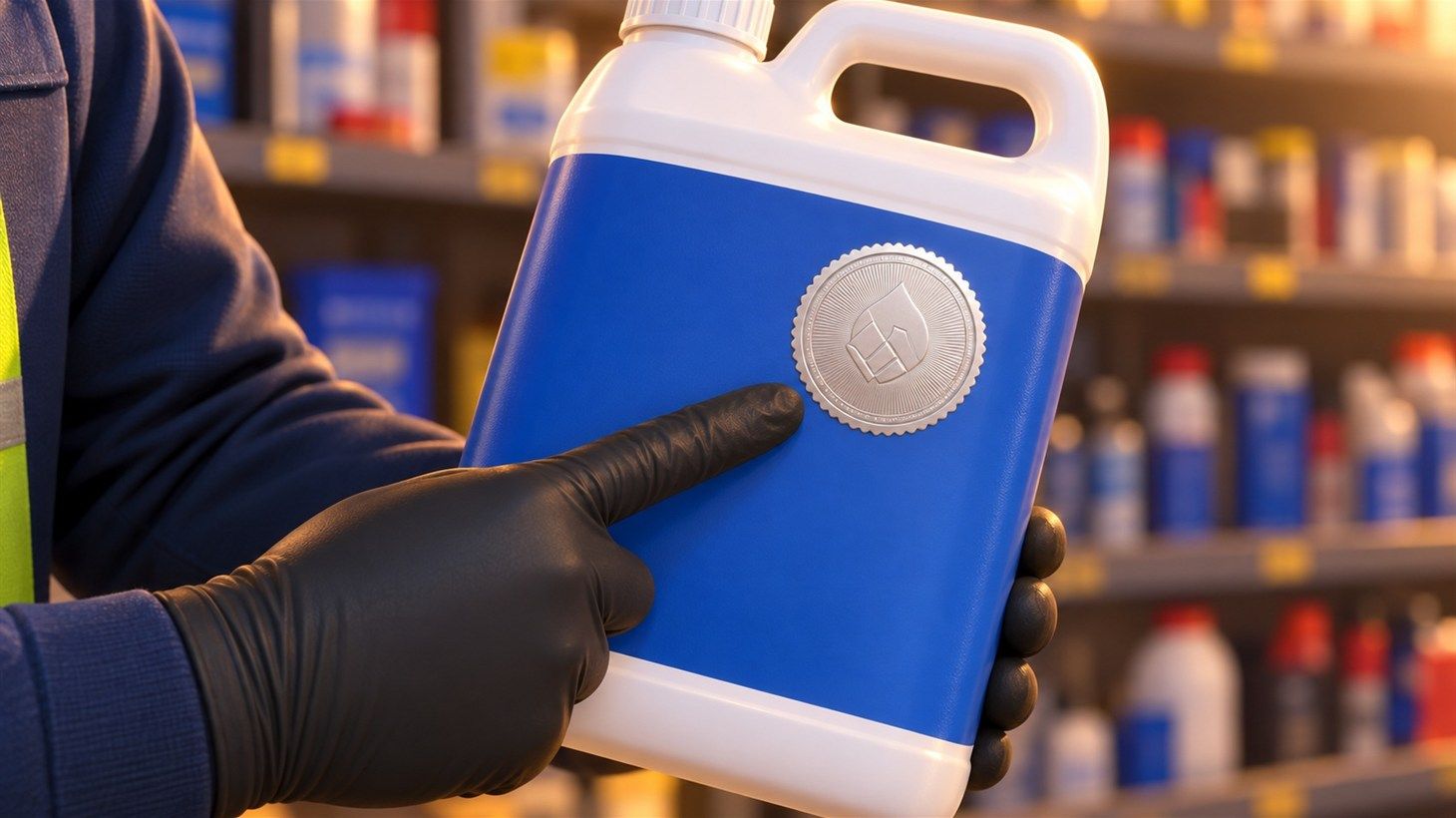
Cheap DEF: what you're actually buying
The second cause is what you bought in the first place.
If DEF isn't API-certified, you're risking product that doesn't meet ISO 22241 — which leads directly to engine derates and downtime. That's not a marketing claim; it's John Deere's own guidance to buy certified product only (Grainews). API-certified DEF has been verified against ISO and OEM purity requirements and is retested in the aftermarket for ongoing compliance (American Petroleum Institute).
Off-brand and bargain fluid tends to fail in three ways: wrong urea concentration, mineral or metal content above spec, and contamination picked up in handling and transport (Parts for Trucks). Any one of them will show up as a fault code eventually.
The worst-case version of cheap fluid isn't cheap at all — it's DEF that's been diluted, adulterated, or substituted with something that isn't ISO 22241 product (NüDef).
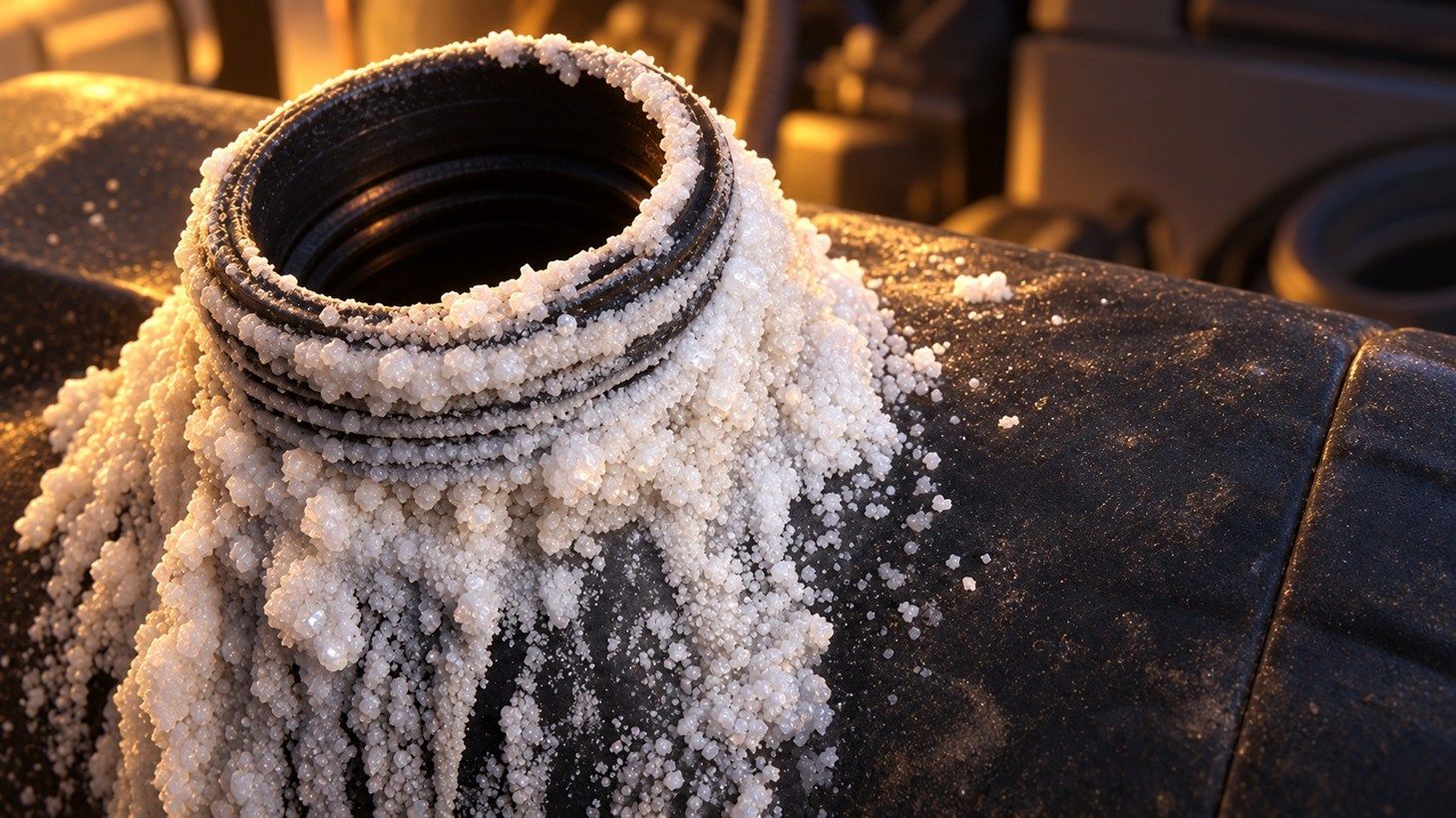
What bad DEF actually does: the results
This is the part that justifies the whole discussion. Contaminated or off-spec DEF causes:
- Higher DEF consumption — the system doses more fluid trying to hit its NOx target
- Reduced NOx conversion — the system stops doing the job it exists to do
- SCR system malfunctions and fault codes
- Engine derate or shutdown — speed and torque limits, then a truck that can't finish a route
- Equipment damage
- Voided manufacturer warranty
Those six are documented consequences, not worst-case speculation (Construction Equipment).
Then it gets physical. Non-compliant DEF carrying metals or minerals deposits directly onto the SCR catalyst face and reduces its ability to convert NOx — and sustained use can destroy the catalyst outright. A single fill with contaminated or diluted DEF can damage an SCR system in one event, with repair costs running into five figures once catalyst poisoning and sensor damage are counted (Millennial's Maintenance).
It also kills sensors. Minerals such as calcium in the fluid gradually form crystals as the machine runs, and that leads straight to DEF header failure (EquipmentShare). Dirty, expired, or non-compliant fluid damages internal sensor elements and clogs the header's filters (TamerX). Fine debris that gets past the header's filter damages the quality sensor and clogs the doser downstream (FridayParts).
And degraded fluid produces the most maddening outcome of all: a truck derated over a quality code when nothing on the truck is broken. The header reads the wrong urea concentration, reports it honestly, and the ECU does what it's designed to do (FridayParts).

The two things that ruin fluid instantly
Heat is slow. These are fast.
Diesel in the DEF tank. The fill necks are sized so a standard diesel nozzle won't fit, but it still happens — most often on rentals and with operators unfamiliar with the equipment — and even small amounts of diesel will ruin the DEF sensor (Messick's). The OEM rule is unforgiving: if diesel is ever found in the DEF tank, the sensor must be replaced (Navistar bulletin via NHTSA).
Anything but a dedicated container. DEF picks up contamination from shared funnels, shop rags, dusty fill areas, and non-dedicated transfer pumps. Even factory debris counts — Cummins documented manufacturing sticker debris in DEF tanks clogging the dosing inlet screen and the tank pickup filter (Cummins bulletin via NHTSA).
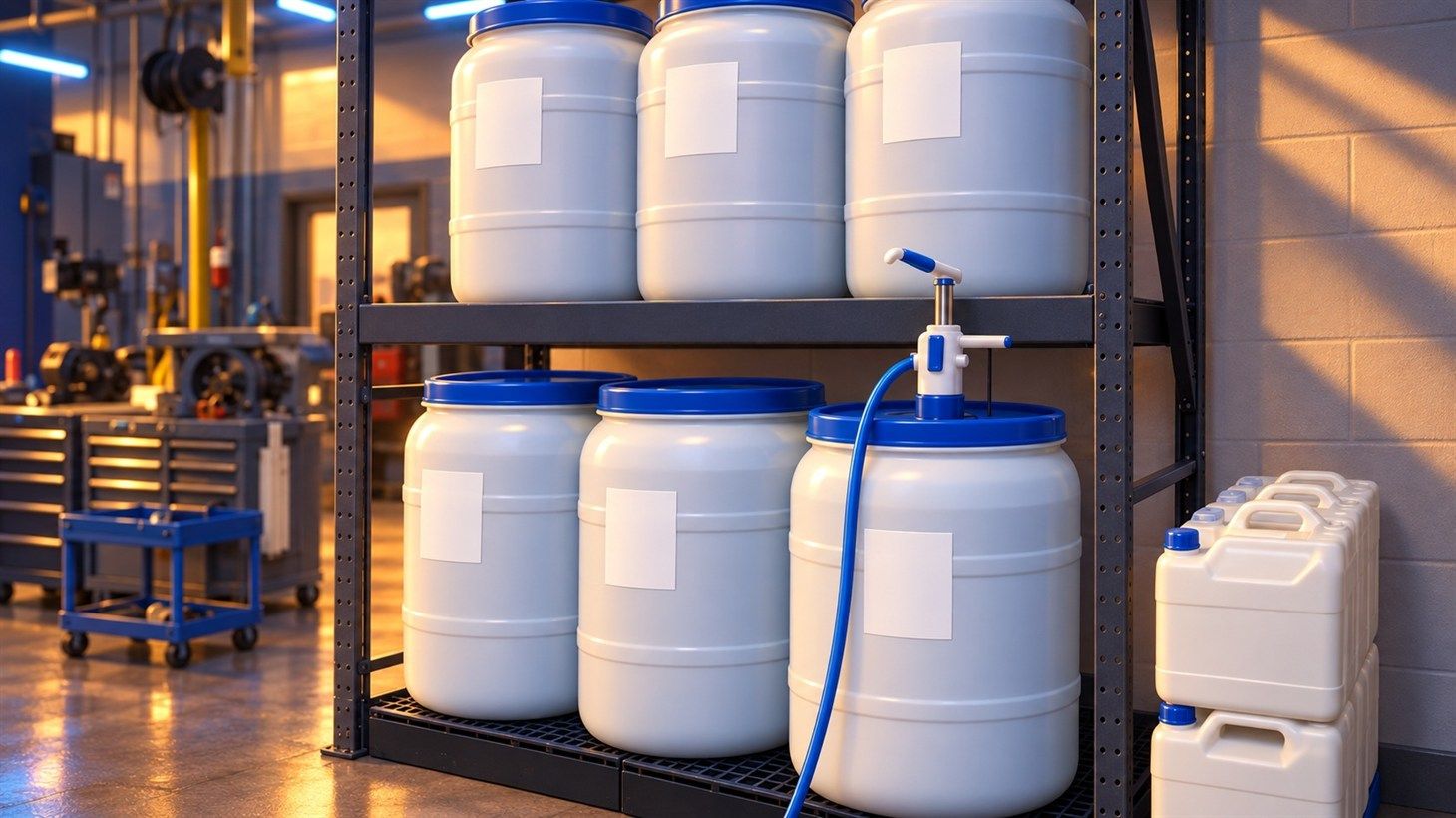
Storage and handling: the short list
- Store indoors, shaded, and as cool as practical. Never in direct sunlight (API)
- Keep containers sealed. A loose lid concentrates the fluid
- Rotate stock oldest-first, and date every container the day it arrives (API)
- Keep DEF separated from fuels and chemicals, and use DEF-only transfer equipment (Western Global)
- Clean dispensing nozzles regularly to limit crystallization at the point of transfer
- Buy API-certified product only
- Keep a refractometer on the bench and verify 32.5% before blaming any part
- Cycle fresh fluid through trucks that sit — spares, standby units, seasonal equipment
That last one matters more than people expect. Equipment that doesn't run regularly never cycles fresh fluid through the system, so the DEF in the tank breaks down in place (Messick's).

Bottom line
DEF is a chemical with a shelf life, not a consumable that keeps forever. The main cause of DEF-related failures is heat and time — a stored product degrading past spec before it ever reaches the truck — with cheap uncertified fluid and contaminated handling close behind.
A refractometer costs less than a tank of fuel. A DEF header costs more than $500, an SCR catalyst runs into five figures, and a parked truck costs you a route. Test the fluid first.
Next in this series: why the DEF header itself fails, why you often can't replace just the sensor, and what to check before you buy the part.
RDK Truck Sales — Tampa, Florida. Refuse truck sales, rentals, parts, and service. Whether it's one truck or a whole yard, if you're chasing repeat DEF codes, our service team can tell a real hardware failure from a fluid problem before you spend on parts.

One misfuelling mistake can destroy a $15,000 system. See the DEF filling, storage, and DPF maintenance procedures that protect from costly repairs.

After 40 years in refuse, RDK's Richard Kemner shares real cold-weather hydraulic maintenance tips to keep your fleet running all winter.

Richard Kemner breaks down the EPA 2027 rule: 82% lower NOx, warranties jumping to 450,000 miles, and whether refuse fleets should buy now or wait.