Exhaust System & Body Maintenance

Preparing for Spring Rain and Wet Weather


By Richard Kemner, Founder • RDK Truck Sales • Tampa, FL • 40+ Years in the Refuse Industry Exhaust System & Body Maintenance.
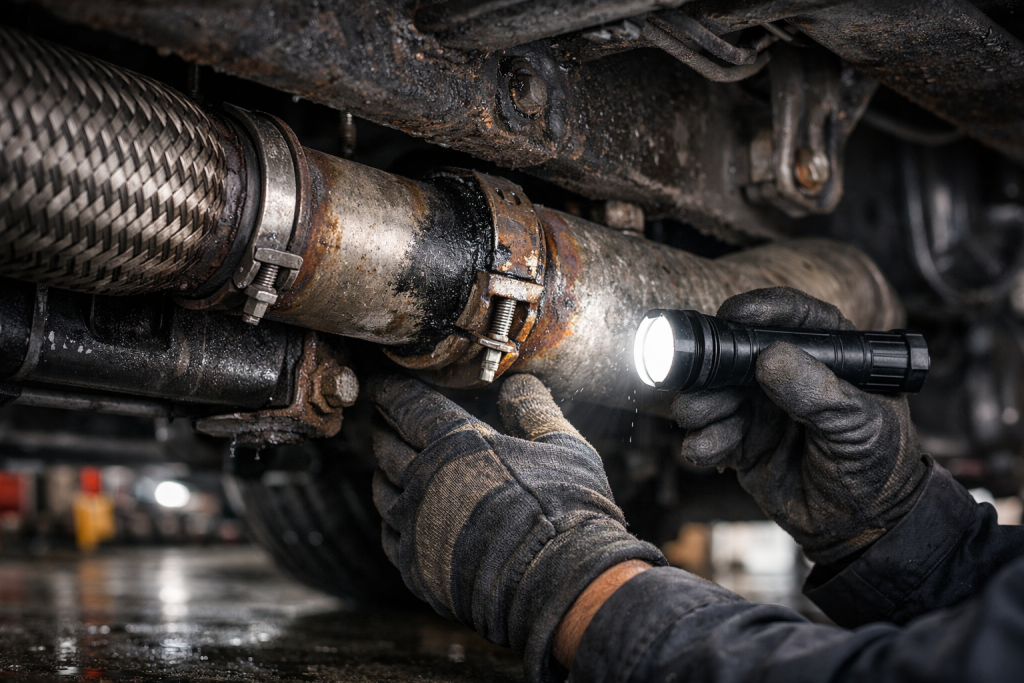
Technician inspecting a refuse truck underside with a flashlight during Exhaust System & Body Maintenance service in a professional repair bay
Exhaust System & Body Maintenance

✅ SPRING EXHAUST SYSTEM & BODY MAINTENANCE CHECKLIST

☐ Inspect all exhaust pipes, clamps, hangers, and brackets
☐ Check for soot staining or exhaust leaks at joints
☐ Inspect flex pipes for cracks or deterioration
☐ Check DPF for soot loading – schedule cleaning if needed
☐ Inspect DEF fluid – drain and refill if degraded
☐ Pressure wash entire body including underside and hopper
☐ Inspect and clear all body drain holes
☐ Touch up scratched, chipped, or bare-metal areas
☐ Inspect hopper floor for thin spots and cracks
☐ Check packer panel and blade for cracks or wear
☐ Inspect all welds at body-to-subframe mounting points
☐ Lubricate tailgate hinges, pins, and latches
☐ Verify tailgate seals to prevent leachate on chassis

If my Hydraulic System Maintenance blog was about the heartbeat of your truck, this one is about protecting the skin and the lungs. Your exhaust system and your truck body take a tremendous beating during winter, and spring brings a whole new set of challenges. Wet weather, road spray, standing water, salt residue, and humidity all go to work on your equipment the minute the temperature rises. In over 40 years in the refuse industry, I’ve watched more trucks rot from the outside in than break from the inside out. The operators who stay ahead of corrosion and exhaust maintenance are the ones who get the most life out of their equipment. It’s not glamorous work, but it’s the kind of work that saves you real money.

Exhaust System & Body Maintenance: What Winter Did to It

Cold starts are brutal on exhaust systems. Every time you fire up a diesel engine in cold weather, you get condensation forming inside the exhaust pipes, the muffler, the DPF, and the entire aftertreatment system. That moisture mixes with exhaust gases and creates acidic compounds that eat metal from the inside out. All winter long, this has been happening on every cold morning start. Now spring arrives. The temperature swings from cold nights to warm days. That cycle keeps the condensation coming. Add in rain, road spray, and the salt and chemical residue from winter road treatments, and your exhaust system is under attack from both inside and outside.

Exhaust System & Body Maintenance: What to Inspect on the Exhaust

Start at the turbo outlet and work your way back to the tailpipe. Look at every clamp, every gasket joint, every hanger, and every bracket. Here’s what you’re looking for: Rust-through or thinning metal on pipes and muffler shells. Tap suspect areas with a screwdriver handle. If it sounds hollow or gives, you’ve got a problem. Loose or broken hangers and clamps. A sagging exhaust pipe will crack at the joints from vibration. Soot staining around joints that indicates an exhaust leak. Black marks on nearby components are a dead giveaway. Cracked or deteriorated flex pipes. These take the most abuse from engine movement and vibration. On trucks with DPF and aftertreatment systems, check for any warning lights or fault codes related to the DPF, DEF system, or SCR catalyst. Winter operation with lots of short runs and low exhaust temperatures is the number one cause of DPF soot loading issues. If your trucks were doing a lot of stop-and-go residential collection in cold weather, there’s a good chance the DPF needs a forced regen or a cleaning.

⚠ ️ RDK Pro Tip: Exhaust leaks don’t just waste fuel and hurt performance. They put carbon monoxide right where your crew works. An exhaust leak near the cab on a rear loader means your driver and helpers are breathing fumes every time they stop at a house. This is a safety issue first, a maintenance issue second.

DPF and Aftertreatment: Don’t Ignore the Lights

If you’ve been putting off a DPF cleaning or ignoring regen warnings, spring is the time to deal with it. A loaded DPF restricts exhaust flow, increases fuel consumption, raises EGT temperatures, and can eventually cause a derate or a shutdown. We’ve seen trucks go into limp mode on route because the operator ignored the DPF warning for weeks.

At RDK we recommend getting your DPF professionally cleaned at least once a year, and more often if you’re running heavy stop-and-go residential routes. It’s a fraction of the cost of replacing a DPF or dealing with the downstream damage that a plugged filter causes.

Also check your DEF fluid. If it sat in the tank all winter and was exposed to freeze-thaw cycles, it may have degraded. DEF that has crystallized or separated will not perform properly and can damage your SCR catalyst. If there’s any doubt, drain the tank and refill with fresh DEF.

Exhaust System & Body Maintenance: Where Body Corrosion Hides

Spring rain and wet weather create a whole new corrosion environment for your refuse body. Water pools in packer chambers, sits in the hopper floor channels, collects around tailgate hinges, and finds every scratch, nick, and bare-metal spot on the body. Salt residue from winter operations or treated roads accelerates the damage.

Here is what we recommend for every truck in your fleet coming into spring:

Wash the entire body thoroughly, including the underside, inside the hopper, and all the hard-to-reach areas behind the packer panel and around the tailgate mechanism. You’re removing salt and chemical residue that will eat your steel. Inspect the hopper floor for thin spots and cracks. Get down underneath and look. This is where leachate sits and where corrosion does its worst work. Use a flashlight. Check the packer panel for cracks, bends, or signs of stress. A cracked packer panel will only get worse under load. Inspect all welds, particularly at high-stress points where the body meets the subframe. Look for rust bubbling under paint around all the edges, corners, and drain holes. That’s corrosion starting underneath the coating. Verify all drain holes are open and clear. Clogged drains mean standing water inside the body, and standing water means rust.

Rain, Mud, and Wet Routes: How They Affect Daily Operations

Spring wet weather doesn’t just affect the truck sitting in the yard. It affects the truck on route every day. Wet loads are heavier loads. A rear loader or front loader packed with rain-soaked yard waste or wet garbage can easily exceed weight limits that the same volume of dry material would not. That extra weight puts more stress on the hydraulics, the body, the chassis, and the brakes.

Mud and standing water on unpaved roads and at landfill sites get thrown up into every gap and crevice on the truck. That mud holds moisture against the metal and creates the perfect environment for corrosion. It also packs into brake components, wheel ends, and suspension parts.

We tell our customers: if your trucks are running wet routes in spring, bump up your wash schedule. A truck that gets washed twice a week during wet season will last years longer than one that only gets washed when someone remembers.

Exhaust System & Body Maintenance: Leachate Management in Wet Weather

This is a big one that gets overlooked. In wet weather, the volume of leachate coming out of your truck body increases significantly. That liquid is acidic and corrosive. If your drain systems aren’t working properly, that leachate sits inside the body and eats the steel from the inside. Make sure your body drains are functioning and that the seals around the tailgate are in good condition to prevent leachate from running down the back of the truck and onto the chassis. Leachate on chassis components, especially on frame rails and crossmembers, causes corrosion that’s expensive to repair and can create safety issues.

This Is Blog 2 of 3 in Our Spring Maintenance Series

Blog 1: Hydraulic System Maintenance – Getting Your Fleet Ready for Spring
Blog 2: Exhaust System & Body Maintenance – Preparing for Spring Rain and Wet Weather
Blog 3: DOT Inspection & Chassis Readiness – A Friendly Reminder That Could Save Your Fleet

Subscribe to our email list or follow us online so you don’t miss the rest of the series. And as always, if you have questions or want to talk shop, give us a call.

Let’s Talk Trash

After 40-plus years in this business, I can tell you one thing for sure: I’m still learning. Every fleet we work with teaches us something new. Every season brings a new challenge. That’s what keeps this industry exciting. If you’ve got a trick that works for your fleet, a question about something we covered here, or you just want to talk trucks, we’d love to hear from you. Drop us a line, give us a call, or stop by the shop in Tampa. At RDK, our customers aren’t just customers. They’re family.

“We Service What We Sell”

Disclaimer: The information in this blog is based on over 40 years of hands-on experience in the refuse industry. It is intended for general informational purposes only. Every fleet, every route, and every truck is different. We strongly encourage you to conduct your own due diligence, consult with qualified technicians, and follow your manufacturer’s specific maintenance guidelines when making equipment servicing and purchasing decisions. If you have questions or want to talk shop, give us a call. We’re always learning and we welcome your feedback.

THE GLAMOROUS LIFE OF GARY THE GARBAGE MAN

A love story between a man, his truck, and 13,000 pounds of trash.

Gary the garbage man standing proudly in front of Big Bertha, his RDK rear loader garbage truck, at sunset
GARY THE GARBAGE MAN & HIS TRUCK BIG BIRTHA

Gary the Garbage Man Kowalski

Nobody ever asks Gary The Garbage Man Kowalski what he does for a living twice. Not because it’s boring – oh no – but because once Gary starts talking, you’re going to be there a while.

It starts at 4:47 in the morning. Not 4:45. Not 5:00. 4:47. Gary has an alarm clock, but honestly, his back wakes him up first out of pure muscle memory and spite.

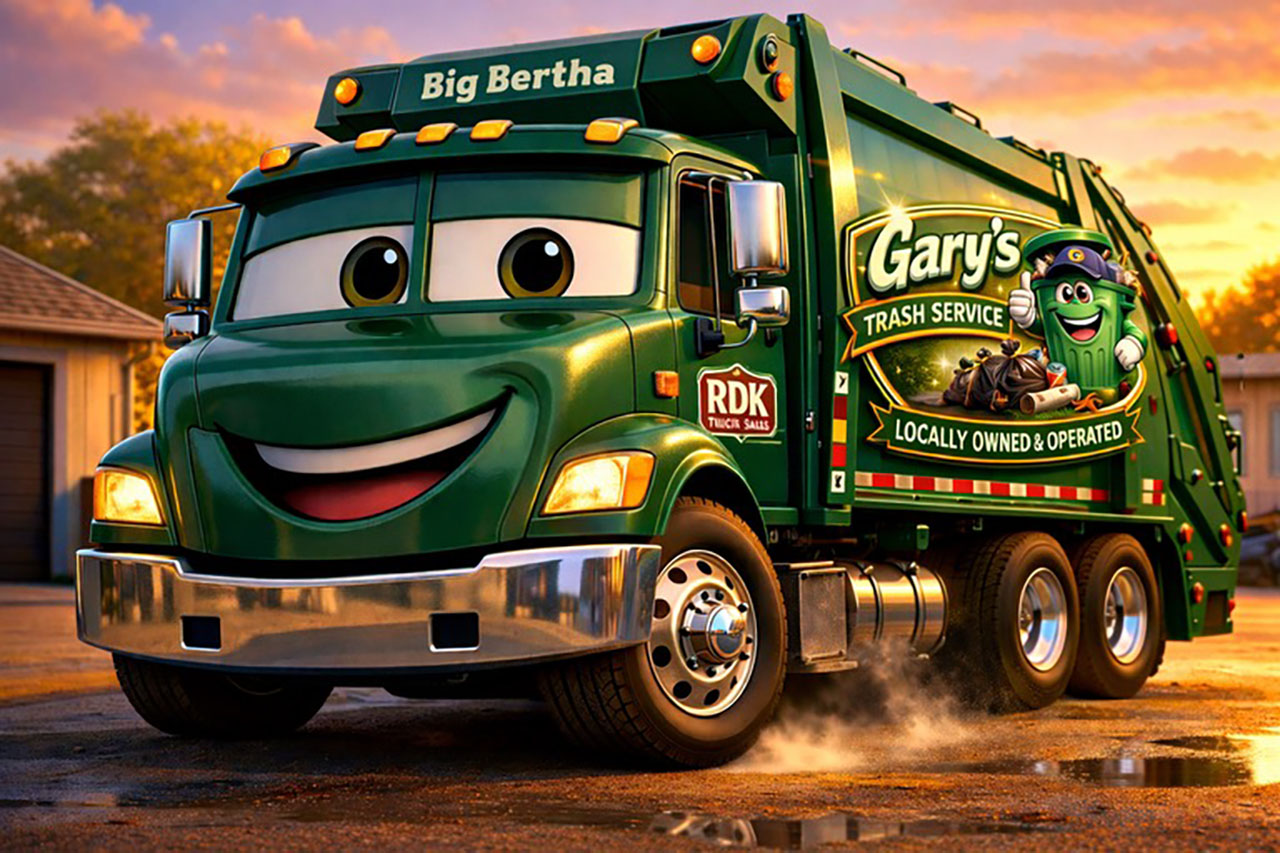
He slides into his work clothes – a ritual he describes as “putting on my perfume” – and heads to the yard, where Big Bertha is waiting. That’s his truck. A rear loader, spec’d and sold by RDK Truck Sales down in Tampa. She weighs about 33,000 pounds empty and sounds like a coffee maker the size of a battleship. Gary loves her unconditionally.

BIG BERTHA – SPEC’D & SOLD BY RDK TRUCK SALES, TAMPA FL

He’ll tell anyone who listens – and several people who weren’t – that Big Bertha is the finest piece of equipment he’s ever operated. “Richard Kemner down at RDK didn’t just sell us a truck,” Gary likes to say, stabbing a finger in the air for emphasis. “He sold us a relationship.”

Gary’s fleet manager rolls his eyes every time Gary says this.

Gary doesn’t care. Big Bertha hasn’t missed a Monday in four years.

“Richard Kemner down at RDK didn’t just sell us a truck. He sold us a relationship” Gary The Garbage Man.

6:00 A.M. – WHILE YOU’RE HITTING SNOOZE

By 6:00 AM, Gary is already on his route while the rest of the neighborhood is still arguing with their snooze buttons. He pulls up to the first house, hops off the step, grabs the can, and tips it into the hopper. The packer blade groans to life.

Thwump. Crunch. Squelch.

“That right there,” Gary will tell you, patting his chest, “is the sound of civilization.”

HE KNOWS EXACTLY WHO YOU ARE.

Gary Has Seen Things

Now, Gary has seen things. THINGS. Things that would make a crime scene investigator retire early.

There was the Tuesday someone threw away a working flat-screen TV, a full Thanksgiving turkey – still in the pan – and what appeared to be an entire life’s worth of self-help books. Gary ate the turkey. He left the books. He’s already figured himself out.

There was the Wednesday a man chased him down the street in a bathrobe, screaming that Gary had taken the wrong bag. Gary had taken the right bag. The man had put his golf clubs in a trash bag and his actual garbage next to his car. Gary gave him zero sympathy and a business card for a therapist.

13,000

POUNDS LIFTED DAILY

60

MILES PER ROUTE

4:47

A.M. START TIME

GARY THE GARBAGE MAN – THE MSYERY MATTRESS INCIDENT – WE DO NOT SPEAK OF IT.

The Mystery Mattress Incident

And then there was the incident of the Mystery Mattress – which Gary refuses to discuss in detail except to say that it took four men, a come-along strap, and a sincere conversation with God to get it into the truck.

What he will say is that after the Mystery Mattress Incident, Big Bertha needed a little attention. One call to RDK’s service department and she was back on the road by Thursday. “They service what they sell,” Gary told his wife Linda that night at dinner, completely unprompted. “That’s a dying art, Linda.”

Linda stared at her mashed potatoes.

By noon, Gary has lifted somewhere in the neighborhood of 13,000 pounds with his bare hands, driven 60 miles, consumed two gas station hot dogs without blinking, and waved to approximately 11 dogs who were genuinely more excited to see him than their own owners.

Dogs, Gary explains, understand the truth: he is the most important man on the street.

Surgeons save lives. Teachers shape minds. Garbage men make sure that the surgeon’s banana peel from Monday isn’t still sitting on the curb by Thursday, turning into something you’d need a hazmat team to identify.

And behind every great garbage man, Gary will remind you, is a great truck. And behind every great truck – at least in his humble opinion – is RDK Truck Sales, Tampa, Florida. Founded 1997. Over 8,400 trucks sold. Parts in stock. Service you can count on.

At this point in the speech, Gary’s fleet manager usually leaves the room.

THE LAST DINNER PARTY – HE KEEPS THE BROCHURE IN HIS JACKET. ALWAYS.

The Last Dinner Party with Gary The Garbage Man

Gary gets home around 2:30 in the afternoon. He showers – twice – eats dinner before most people have had lunch, and is asleep on the couch by 7 PM while the evening news is still doing the opening jingle.

His wife Linda has stopped trying to take him to dinner parties. The last time she did, someone asked Gary what he did for a living and he explained – in vivid, loving, technically precise detail – exactly how a packer blade cycle works, complete with sound effects. Then he pivoted, seamlessly and without warning, into a ten-minute endorsement of RDK Truck Sales that ended with him handing the host a brochure he apparently keeps in his jacket pocket.

At dinner parties.

In his jacket pocket.

They ate alone for the rest of the night.

But Gary didn’t mind.

He slept great.

Surgeons save lives. Teachers shape minds. Garbage men make sure civilization doesn’t smell like last Tuesday.” Gary the Garbage Man.

4:47 AM – EVERY SINGLE MORNING

Every Morning – Gary The Garbage Man

And every single morning, when Gary the Garbage Man pulls Big Bertha out of the yard before the sun comes up and heads out into the dark, quiet streets – he smiles.

Because he knows something the rest of the world doesn’t.

Somebody’s gotta do it.

And more importantly… somebody’s gotta do it at 4:47.

The next time you roll your can to the curb the night before pickup, just remember – there’s a Gary out there somewhere, loading up, lacing his boots, climbing into a truck that was spec’d, sold, and serviced by people who actually give a damn.

He’s seen your trash.
He knows exactly who you are.
He’s got a Big Bertha built to handle every last bit of it.

And somewhere down in Tampa, Richard Kemner is already at his desk – smiling, coffee in hand – because another truck just turned another wheel on another route, doing exactly what it was built to do.

…and Gary still has that brochure if you need one.

READY FOR YOUR OWN BIG BERTHA?

RDK Truck Sales – Tampa, FL

Founded 1997. Over 8,400 trucks sold. Parts in stock. Service you can count on. Ask about our rear loaders, roll-off trucks, grapple trucks, and more.

2027 Emissions Changes

My Takeaway from Work Truck Week 2026

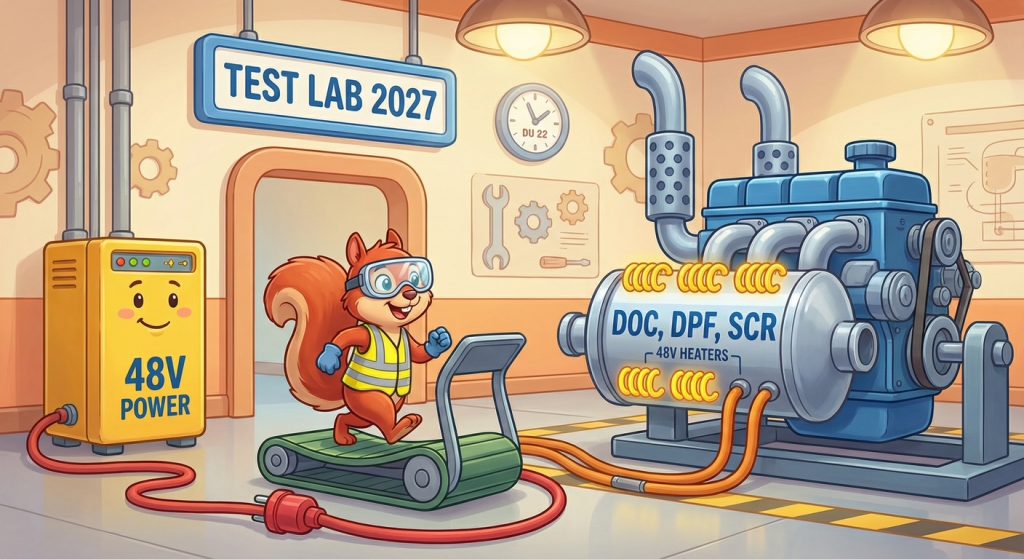
Cartoon image of a squirrel on a treadmill supplying power to a large commercial engine powering the aftertreatment system 2027 Emissions Changes
By Richard Kemner ● RDK Truck Sales ● Work Truck Week 2026  ·  Indianapolis, IN

I flew to Indianapolis to see if I could make sense of the 2027 emissions changes. I wanted to see trucks and discuss the upcoming changes with each manufacturer prior to ordering truck chassis for this year and to see how much, if any, of the needed changes affect mounting bodies for 2027 engines.

For example: exhaust sizes, wiring, or programming features. I was hoping to get some answers.

What I got after spending more than 14 hours on the Work Truck Show expo floor was the same feeling from every single chassis manufacturer:

What We Heard, Repeated, From Every Booth

  • We are ready.
  • We feel this is going to be easier than the 2007 emissions change.
  • We do not have anything to show you today.
  • We are fine-tuning exhaust packaging and sensor placement.
  • We are working to resolve any extra requirements for the cooling package.
  • This should be easier. We are using 24-volt or 48-volt systems to manage it.

Lots of time spent trying to reassure me they have the best solution.

What We Saw on the Show Floor

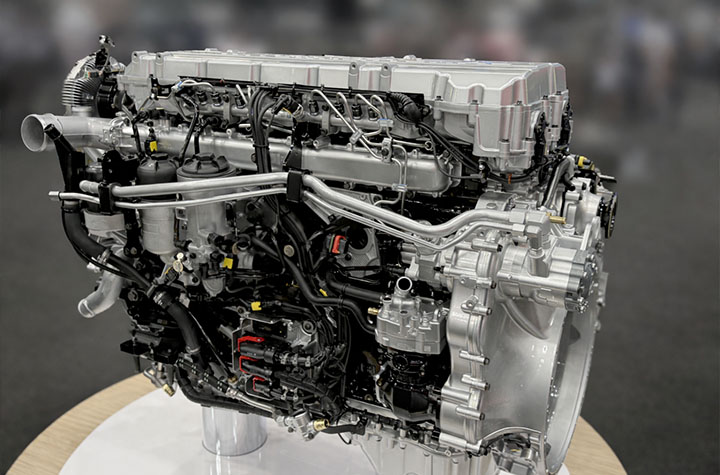
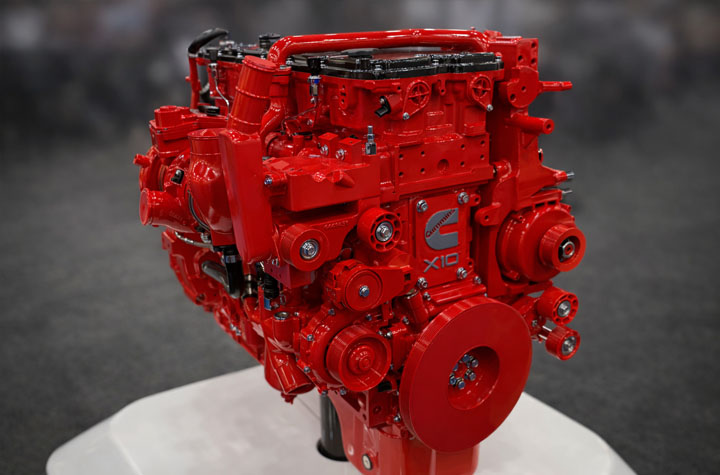
The engine manufacturers did have their 2027-compliant powertrains on display. Here’s a look at what was shown:

2027 Emissions Changes, silver engine showing components in detail on display

A 2027-compliant engine on display at Work Truck Week but still no production chassis to mount it in.

2027 Emissions Changes, Cummins engine showing components in detail on display

The Cummins X10 engine, one of the platforms being updated for 2027 emissions compliance.

The Aftertreatment Challenge – 2027 Emissions Changes

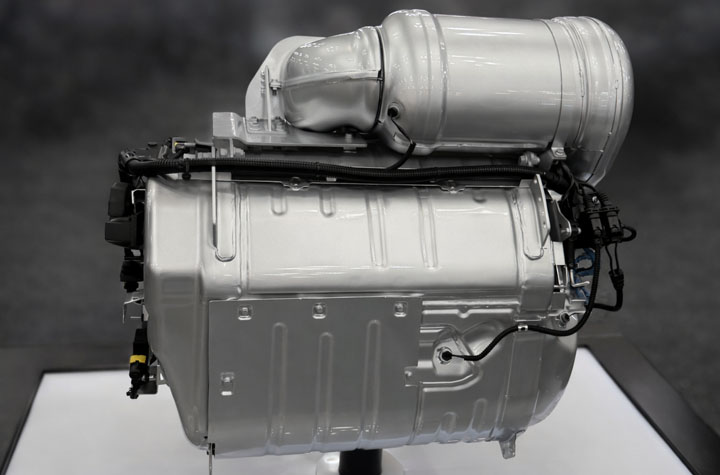
The biggest question for our industry; refuse body and roll-off hoist mounting comes down to the aftertreatment systems. The new DOC, DPF, and SCR units with 48V electric heaters are larger and require different packaging on the chassis frame rails.

Engine aftertreatment system on display

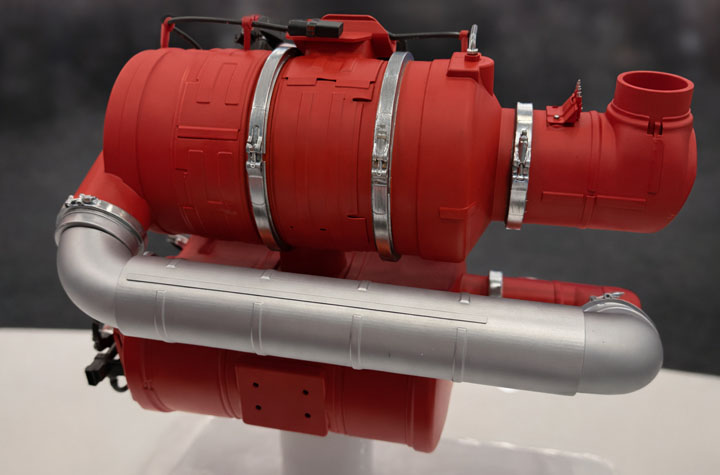
New aftertreatment housing on display, notice the size of this unit compared to current models.

Cummins engine aftertreatment system on display

Cummins aftertreatment system for 2027 the exhaust packaging that every chassis manufacturer told me they’re still “fine-tuning” How the New 48V Aftertreatment System Works

How the New 48V Aftertreatment System Works

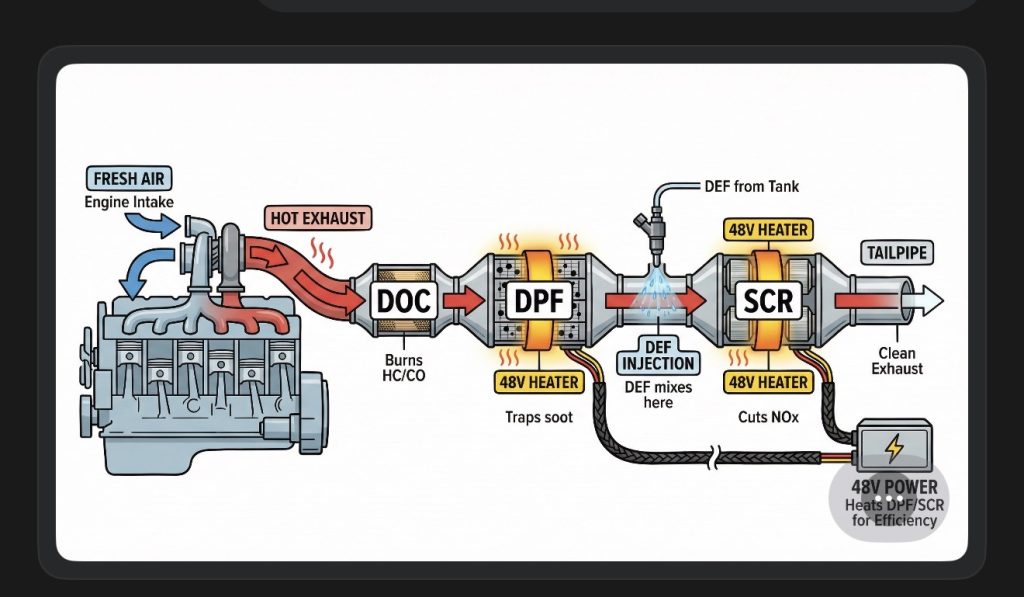
Diagram showing flow of exhaust through engine and aftertreatment system
This diagram explains the 2027 exhaust flow: DOC → DPF → SCR, all with 48V electric heaters to maintain
temperature for emissions control at idle and low loads.

Key Technical Change

DOC → DPF → SCR with 48V Electric Heaters

The 2027 standard introduces electrically heated aftertreatment components to maintain system temperatures during idle and low-load operation. The larger packaging footprint of these units is the primary concern for body upfitters mounting refuse and roll-off equipment on the chassis frame rails.

The Honest Truth – 2027 Emissions Changes

As I sit here on this plane headed home, I ask myself: what did I actually find out on this trip? And why do I feel sick to my stomach? No clear explanation other than everyone trying to sell me on the idea that it’s all under control.

I’m a realist. We know it’s coming, and we know it will not be easy. We can’t pretend it’s all okay.

Next year, if and when the new truck chassis have issues or are delayed or require additional modifications to mount refuse bodies and handle computer programming changes will we be ready? Will we be able to educate our friends, partners, technicians, and the general public with a clearer plan? And in my own business, how do we plan to face these challenges?

I’m sorry to say this is a very difficult task. We have no better idea today than before I landed in Indy on Monday night. I’m writing this to let you know: we are still trying to figure it out. And we will try to keep you informed as we keep pressing forward.

Richard Kemner – RDK Truck Sales

Stay tuned for updates as we learn more about the 2027 emissions transition.

Hydraulic System Maintenance:

Getting Your Fleet Ready for Spring


By Richard Kemner, Founder • RDK Truck Sales • Tampa, FL • 40+ Years in the Refuse Industry Dealing with Hydraulic System Maintenance Issues.

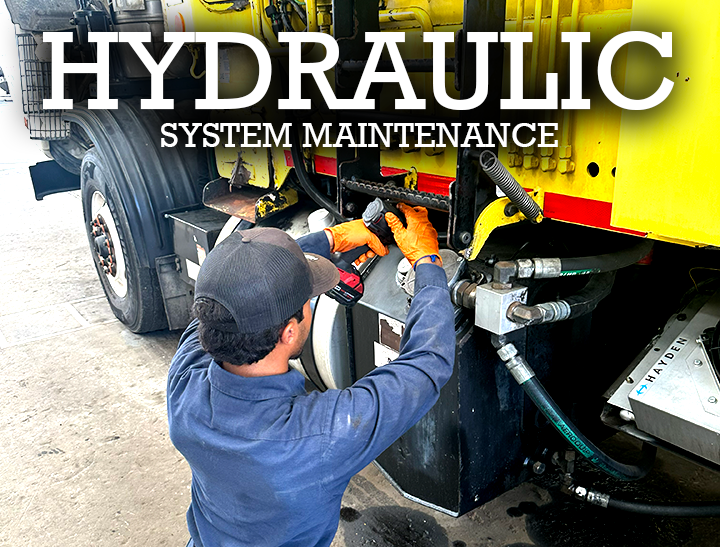
Hydraulic system maintenance on a commercial truck as a mechanic inspects hoses and fittings in a service bay.

✅ SPRING HYDRAULIC CHECKLIST

☐ Pull and inspect hydraulic fluid sample
☐ Change all hydraulic filters (return line, suction, in-line)
☐ Inspect every hose for cracks, bulging, and chafe marks
☐ Check all fittings for leaks
☐ Inspect cylinder rods for scoring and pitting
☐ Look for weeping seals on all cylinders
☐ Test full system operation under load
☐ Listen for pump noise, cavitation, or whine
☐ Verify reservoir fluid level after full cycle
☐ Check breather cap on reservoir for blockage

Winter is hard on garbage trucks. If you run a fleet anywhere that gets real cold, you already know that. But what a lot of operators don’t think about is what happens when the weather changes. That transition from cold to warm is where a lot of problems show up, especially in your hydraulic systems. I’ve been in the refuse business since 1983. Started riding routes at five in the morning just to learn. Over 40 years later, I’m still learning. But one thing I can tell you with absolute confidence is this: your hydraulics are the heartbeat of a refuse truck. If they go down, you go down. And spring is when they like to remind you of that.

Why Winter Beats Up Your Hydraulics

Cold weather thickens hydraulic fluid. When temperatures drop below freezing, your fluid viscosity changes dramatically. That means your pumps are working harder, your cylinders are moving slower, and every seal in the system is under more stress than it was designed for. The rubber in your hoses and seals contracts and gets brittle. Metal components expand and contract with temperature swings. All winter long, your hydraulic system has been taking a beating even if everything looked fine from the cab.

Here’s what we’ve seen over the years: the trucks that have the most spring breakdowns are the ones that nobody looked at during winter. They just kept running them. And now, as temperatures rise, all those cold-weather microdamage starts showing up as real problems.

Hydraulic Fluid: Check It, Change It, Get It Right

This is step one and it’s the most important. Pull a fluid sample. Look at the color. Fresh hydraulic fluid is a clear amber. If yours looks dark, milky, or has visible particles in it, you’ve got contamination. Milky fluid almost always means moisture got in, and that’s a killer for pumps and valves. Even if your fluid looks okay, consider when it was last changed. Most manufacturers recommend a full hydraulic fluid change every 2,000 to 4,000 operating hours depending on the application and the conditions you’re running in. If you ran hard all winter and you’re anywhere near that interval, spring is the time to do it. One thing we tell every customer: don’t mix fluid types. If your system calls for AW-46, use AW-46. If it calls for AW-68, use AW-68. Mixing viscosities or brands can cause foaming, overheating, and accelerated wear. When in doubt, check your operator’s manual or give your body manufacturer a call.

⚠ ️ RDK Pro Tip: If you see foam on top of the fluid when you open the reservoir, you either have an air leak on the suction side or moisture contamination. Don’t ignore it. Both will destroy your pump over time.

Hoses and Fittings: Look for the Warning Signs

Walk around every truck in your fleet with a flashlight and look at every hydraulic hose you can see. You’re looking for cracking on the outer cover, bulging anywhere along the length, wet spots or oil film around fittings, and any hose that looks like it’s been rubbing against the frame or body. Winter cold makes rubber brittle. Spring warmth makes it expand. That cycle is exactly what causes hoses to fail. A hose that survived all winter can blow on the first warm day because the rubber finally gave out after months of contracting and expanding. Pay special attention to hoses near heat sources like the exhaust manifold and engine. Also check any hoses that route through tight spaces where they might rub. Chafing is one of the most common causes of hydraulic hose failure on refuse trucks, and it’s almost always preventable with proper routing and clamps. At RDK we’ve seen hoses blow on route and dump 40 gallons of hydraulic fluid on a residential street. That’s an environmental issue, a safety issue, and a very expensive tow. A ten-minute visual inspection can prevent all of that.

Cylinders and Seals: Where the Money Is

Your packer cylinders, tailgate cylinders, and body lift cylinders do the heavy lifting every single day. After a hard winter, check every cylinder for rod scoring, pitting, and any signs of oil weeping past the seals. Even a small drip means the seal is compromised, and it’s only going to get worse as temperatures rise and the system heats up under load. Seal replacement is relatively inexpensive if you catch it early. A failed cylinder because you let it go is not. We’ve seen packer cylinders lock up mid-cycle because a seal blew out and all the pressure was lost. That’s a truck off route and a crew standing around waiting for a service call.

Filters: The Cheapest Insurance You Can Buy

A key step in hydraulic system maintenance is changing your hydraulic filters. Every single one. Return line filters, suction filters, and any in-line filters your system has. Coming out of winter, those filters have been catching all the contaminants that cold weather and condensation created. A clogged filter means your pump is working against restriction, which means heat, which means accelerated wear on every component downstream. This is one of the simplest and cheapest maintenance items you can do, and it’s one of the most commonly skipped. At RDK we stock filters for every body and chassis we sell. There’s no reason to skip this step.

Test the System Under Load

After you’ve checked the fluid, inspected the hoses, looked at the cylinders, and changed the filters, run the system through a full cycle under load. Watch for slow operation, jerky movements, unusual noise, and any vibration that wasn’t there before. Cycle the packer. Cycle the tailgate. Operate the body lift if applicable. Do it multiple times and pay attention.

A system that works fine with no load but struggles under load is telling you something. Usually it’s a pump that’s starting to wear internally, a relief valve that needs adjustment, or a cylinder that’s bypassing internally even though it’s not leaking externally yet.

This Is Blog 1 of 3 in Our Spring Maintenance Series

Blog 1: Hydraulic System Maintenance: Getting Your Fleet Ready for Spring
Blog 2: Exhaust System & Body Maintenance Preparing for Spring Rain and Wet Weather
Blog 3: DOT Inspection & Chassis Readiness – A Friendly Reminder That Could Save Your Fleet

Subscribe to our email list or follow us online so you don’t miss the rest of the series. And as always, if you have questions or want to talk shop, give us a call.

Let’s Talk Trash & Hydraulic System Maintenance

After 40-plus years in this business, I can tell you one thing for sure: I’m still learning. Every fleet we work with teaches us something new. Every season brings a new challenge. That’s what keeps this industry exciting. If you’ve got a trick that works for your fleet, a question about something we covered here, or you just want to talk trucks, we’d love to hear from you. Drop us a line, give us a call, or stop by the shop in Tampa. At RDK, our customers aren’t just customers. They’re family.

“We Service What We Sell”

Disclaimer: The information in this hydraulic system maintenance blog is based on over 40 years of hands-on experience in the refuse industry. It is intended for general informational purposes only. Every fleet, every route, and every truck is different. We strongly encourage you to conduct your own due diligence, consult with qualified technicians, and follow your manufacturer’s specific maintenance guidelines when making equipment servicing and purchasing decisions. If you have questions or want to talk shop, give us a call. We’re always learning and we welcome your feedback.

Standing Strong in Uncertain Times

March 1, 2026 By Richard Kemner.

Open highway at sunrise with clear road lines ahead, symbolizing standing strong, unity, and steady leadership in uncertain times.

When the World Shakes, We Keep Moving – Standing Strong

The news out of Iran these past few days add yet another layer of uncertainty to a world that already feels unsteady. The headlines grow more uncomfortable, and it can seem like the future is slipping further out of focus. Yet here we are. Every morning, we still unlock doors, start engines, load trucks, answer phones, and take care of customers. We keep our commitments. We show up for our teams and our families. The world may shake, but the work still needs doing, and we do it. At the same time, we can’t ignore what’s happening here at home. As a nation, we often seem divided quick to turn every global event into fuel for one agenda or another. Red, blue, left, right. But on days like this, those labels feel small. How about we stand as one today? There are moments in history when the most important thing we can say is simply “us.” We have survived wars, recessions, terrorist attacks, pandemics, and countless personal tragedies. Again and again, we’ve walked through fire and somehow found a way to rebuild. That doesn’t mean the pain isn’t real. Lives have been lost, families have been shattered, and there are people who will carry the weight of this day for the rest of their lives. We can’t and shouldn’t look away from that. Sorrow and compassion are part of what make us human. Still, history teaches a hard but important truth: every period of crisis also brings change, and with change comes opportunity. New ways of working, new partnerships, new technologies, and new paths forward are often born out of the very moments that scare us the most. Adversity has a way of revealing strengths we didn’t know we had. Keep standing strong together as one people under one flag.

The Storm and the Sun

Think about a storm. When it rolls in, it brings rain, wind, and darkness. The sky turns heavy and gray, and for a while it can feel like it will never clear. But storms don’t last forever. The clouds break. The sun comes out. The sky turns clear blue again. The flowers, which looked beaten down, start to bloom even brighter. That’s a metaphor for how we choose to see the “rain” in our own lives and in our world. Is it just sad darkness or is it also a chance to grow? I choose to see it as a pattern: challenge, struggle, renewal, growth. The rain may be uncomfortable, even painful, but it also feeds the roots. It prepares the ground for something new.

Moving Forward Together – Standing Strong

Here at RDK Truck Sales, we will continue to do what we’ve always done: show up, serve our customers, support our partners, and take care of our people. We stand strong not because we know exactly how things will turn out, but because we know who we are when things get hard. We adapt. We adjust. We learn. We hold two truths at once: a genuine grief for those who are hurting, and a stubborn belief that brighter days are still ahead. Every storm brings darkness, but it also makes the sunlight that follows feel even more powerful. Brighter days are to come. The sky will clear, the flowers will bloom, and if we choose to see the bigger picture, we’ll find that even the hardest rain left something valuable behind.


From all of us at RDK Truck Sales, Standing Strong

Richard Kemner
Founder
RDK Truck Sales
Tampa, Florida