
My Takeaway from Work Truck Week 2026
I flew to Indianapolis to see if I could make sense of the 2027 emissions changes. I wanted to see trucks and discuss the upcoming changes with each manufacturer prior to ordering truck chassis for this year and to see how much, if any, of the needed changes affect mounting bodies for 2027 engines.
For example: exhaust sizes, wiring, or programming features. I was hoping to get some answers.
What I got after spending more than 14 hours on the Work Truck Show expo floor was the same feeling from every single chassis manufacturer:
What We Heard, Repeated, From Every Booth
- We are ready.
- We feel this is going to be easier than the 2007 emissions change.
- We do not have anything to show you today.
- We are fine-tuning exhaust packaging and sensor placement.
- We are working to resolve any extra requirements for the cooling package.
- This should be easier. We are using 24-volt or 48-volt systems to manage it.
Lots of time spent trying to reassure me they have the best solution.
What We Saw on the Show Floor
The engine manufacturers did have their 2027-compliant powertrains on display. Here’s a look at what was shown:
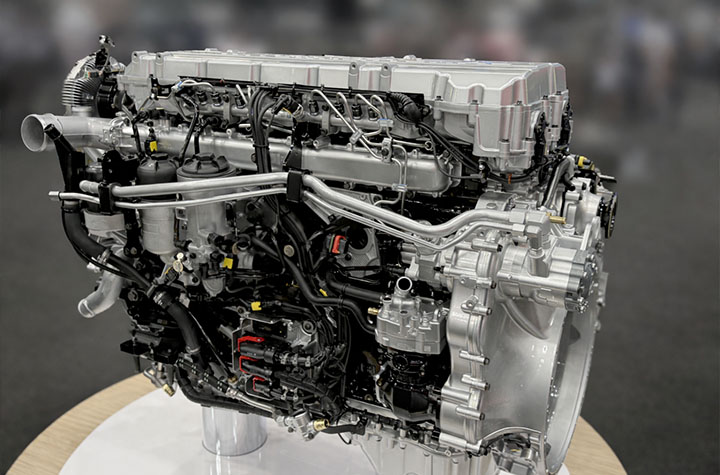
A 2027-compliant engine on display at Work Truck Week but still no production chassis to mount it in.
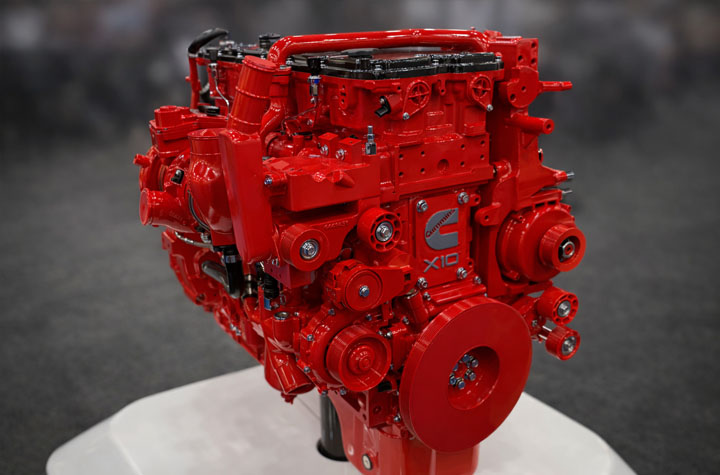
The Cummins X10 engine, one of the platforms being updated for 2027 emissions compliance.
The Aftertreatment Challenge – 2027 Emissions Changes
The biggest question for our industry; refuse body and roll-off hoist mounting comes down to the aftertreatment systems. The new DOC, DPF, and SCR units with 48V electric heaters are larger and require different packaging on the chassis frame rails.
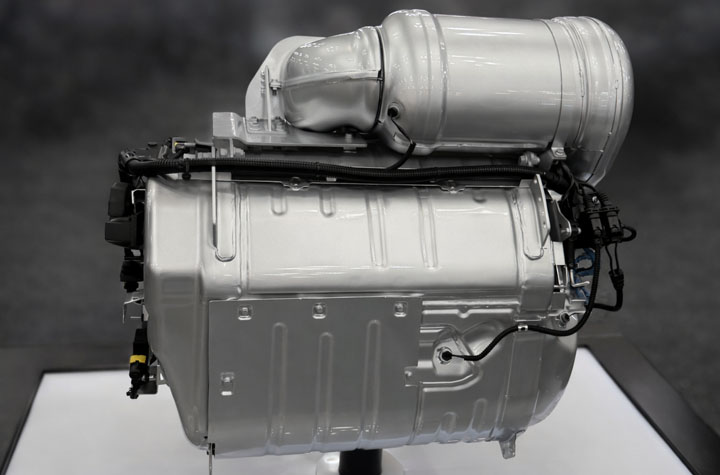
New aftertreatment housing on display, notice the size of this unit compared to current models.
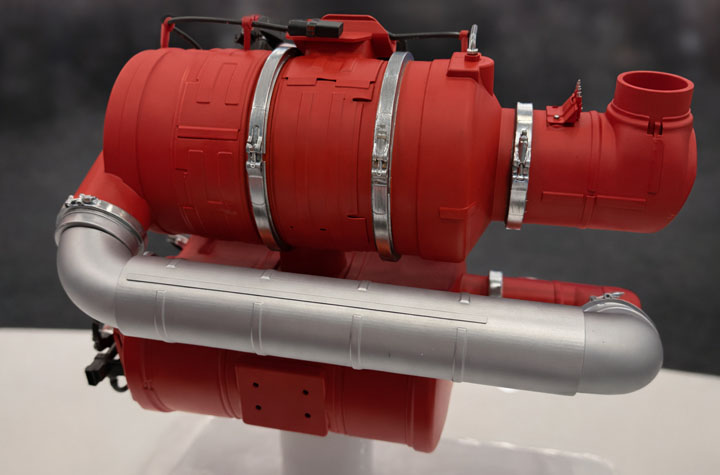
Cummins aftertreatment system for 2027 the exhaust packaging that every chassis manufacturer told me they’re still “fine-tuning” How the New 48V Aftertreatment System Works
How the New 48V Aftertreatment System Works
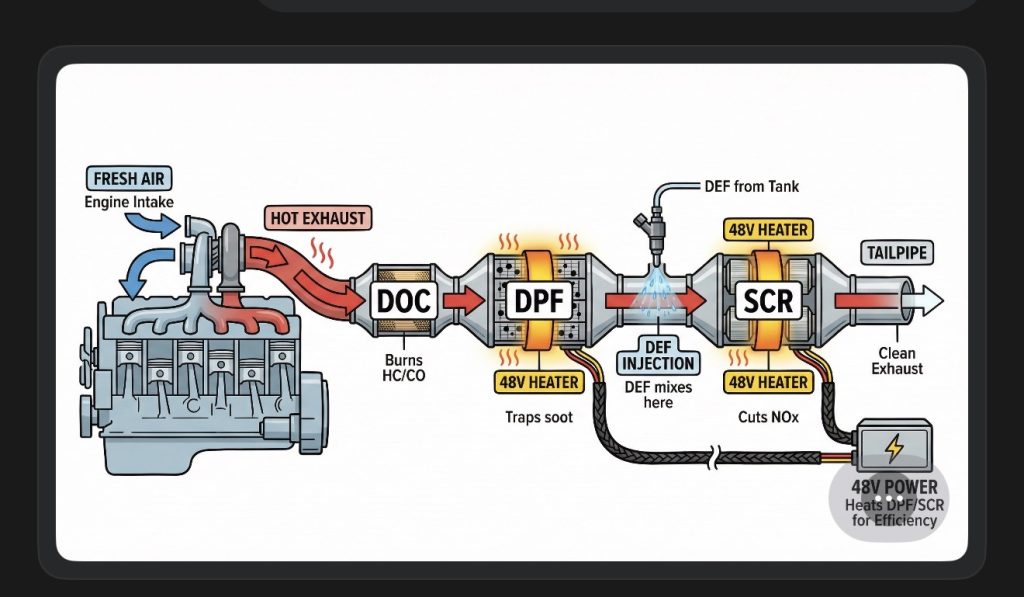
temperature for emissions control at idle and low loads.
Key Technical Change
DOC → DPF → SCR with 48V Electric Heaters
The 2027 standard introduces electrically heated aftertreatment components to maintain system temperatures during idle and low-load operation. The larger packaging footprint of these units is the primary concern for body upfitters mounting refuse and roll-off equipment on the chassis frame rails.
The Honest Truth – 2027 Emissions Changes
As I sit here on this plane headed home, I ask myself: what did I actually find out on this trip? And why do I feel sick to my stomach? No clear explanation other than everyone trying to sell me on the idea that it’s all under control.
I’m a realist. We know it’s coming, and we know it will not be easy. We can’t pretend it’s all okay.
Next year, if and when the new truck chassis have issues or are delayed or require additional modifications to mount refuse bodies and handle computer programming changes will we be ready? Will we be able to educate our friends, partners, technicians, and the general public with a clearer plan? And in my own business, how do we plan to face these challenges?
I’m sorry to say this is a very difficult task. We have no better idea today than before I landed in Indy on Monday night. I’m writing this to let you know: we are still trying to figure it out. And we will try to keep you informed as we keep pressing forward.
Richard Kemner – RDK Truck Sales
Stay tuned for updates as we learn more about the 2027 emissions transition.