
Your Dash Says Low DEF. The Tank Is Full. Here's What's Really Wrong.
Author
Richard Kemner
Date Published

DEF Systems · Part 2 of 2
Your Dash Says Low DEF. The Tank Is Full. Here's What's Really Wrong.

The dash lights up on the morning route. The truck says the DEF tank is low. The driver climbs down, pops the blue cap, and looks in — the tank is full. Nobody touched anything.
Two days later the truck won't go over 25 mph.
Ask an owner, a driver, or the mechanic in the bay which part they hate most, and you'll hear the same answer: the DEF header. A part that starts north of $500 can park a $350,000 truck — and if you own that truck, it will make you insane.
What that light means in the first hour
Before you order anything, sort the symptom:
- Light on, tank full — suspect the sensor or the fluid, not the tank. Test the fluid before you buy a part.
- White crusty buildup around the blue cap, the header, or the doser — the fluid side is your problem, and a new sensor will fail the same way.
- Cloudy or oily fluid — coolant is getting in. That's a cracked header, not a bad reading.
- Fluid tests off 32.5% — the fluid is the failure, and the sensor is doing its job. (We covered that side of it in our post on DEF fluid quality and storage.)
Everything below is why.
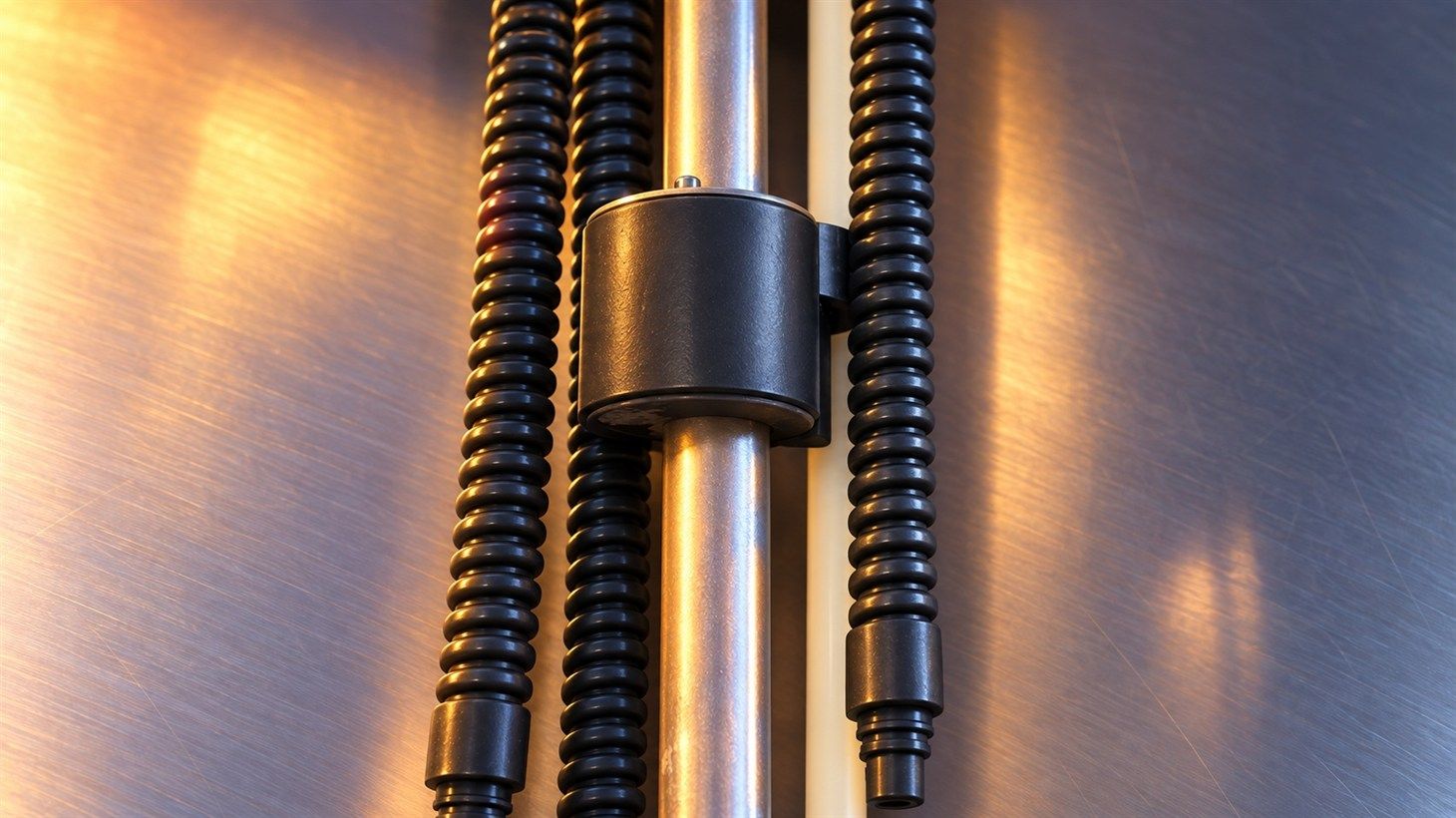
What a DEF header actually is
Think of it as the fuel-gauge sender for your emissions fluid. It sits in the top of the blue-capped DEF tank and tells the truck's computer how much fluid is in there, how warm it is, and whether the fluid is any good.
The difference is what happens when it lies. A bad fuel gauge just gives you a wrong reading. A bad DEF header tells the engine computer the emissions system is compromised, and the computer starts shutting the truck down — even when the tank is full and the fluid is perfect.
That's the whole problem in one sentence: a $500 sensor gets an opinion, and a $350,000 truck stops working.
Technically, the header (also called the sender unit, head unit, or reservoir assembly) bundles several jobs into one cartridge: the level sensor, temperature sensor, coolant heater tube, fluid pickup, and filter — plus the quality sensor on 2017-and-newer units. Because it's all one piece, one crystallized float or corroded sensor takes the whole assembly's readings down (NüDef).

Why headers fail
Crystallization. The number one killer, and worst on trucks that sit. When a truck sits, DEF crystallizes around the float on the level sender tube and sticks it — the factory fix in older bulletins was literally cleaning it off with hot water (DTNA bulletin via NHTSA). Spares, storm-standby units, and demo trucks are your exposure. Crystals also build on the suction filter and on sensor faces, producing wrong readings when nothing electrical has failed (FridayParts).
The quality sensor. Quality codes are the most frequently observed header issue in OEM troubleshooting bulletins, caused by tank debris, bubbles obstructing the sensor, water ingress, optical sensor corrosion, loose pigtail connections, and internal circuitry failure (Cummins/Pierce bulletins via NHTSA). On early designs, ammonia gas from heated urea migrated into the sensor's circuit board and corroded it (Road Warrior). Early board failures were also traced to heat — nearby exhaust plus hot coolant constantly circulating through the head (National Indoor RV Centers). The Truck and Engine Manufacturers Association flagged urea quality sensors as having one of the highest failure rates of any SCR component (Heavy Duty Trucking).
Coolant intrusion. Vibration and thermal cycling crack the header's internal coolant tubes, glycol enters the DEF, and the quality sensor catches it immediately. Cloudy or oily DEF is almost always this (FridayParts). A stuck-open coolant control valve is a related path — hot coolant circulating when it shouldn't, cooking the fluid (TruckersReport).
Contamination and misfuels. Dirt at fill plugs the header's filter and damages the sensor. Worse is the blue cap getting the green nozzle — even small amounts of diesel in the DEF tank will ruin the sensor (Messick's).
Fluid that's already off-spec. Degraded or uncertified fluid makes the sensor read the wrong urea concentration. It isn't the header's fault, but the header is what reports it to the ECU and triggers the warnings and speed limits (FridayParts).
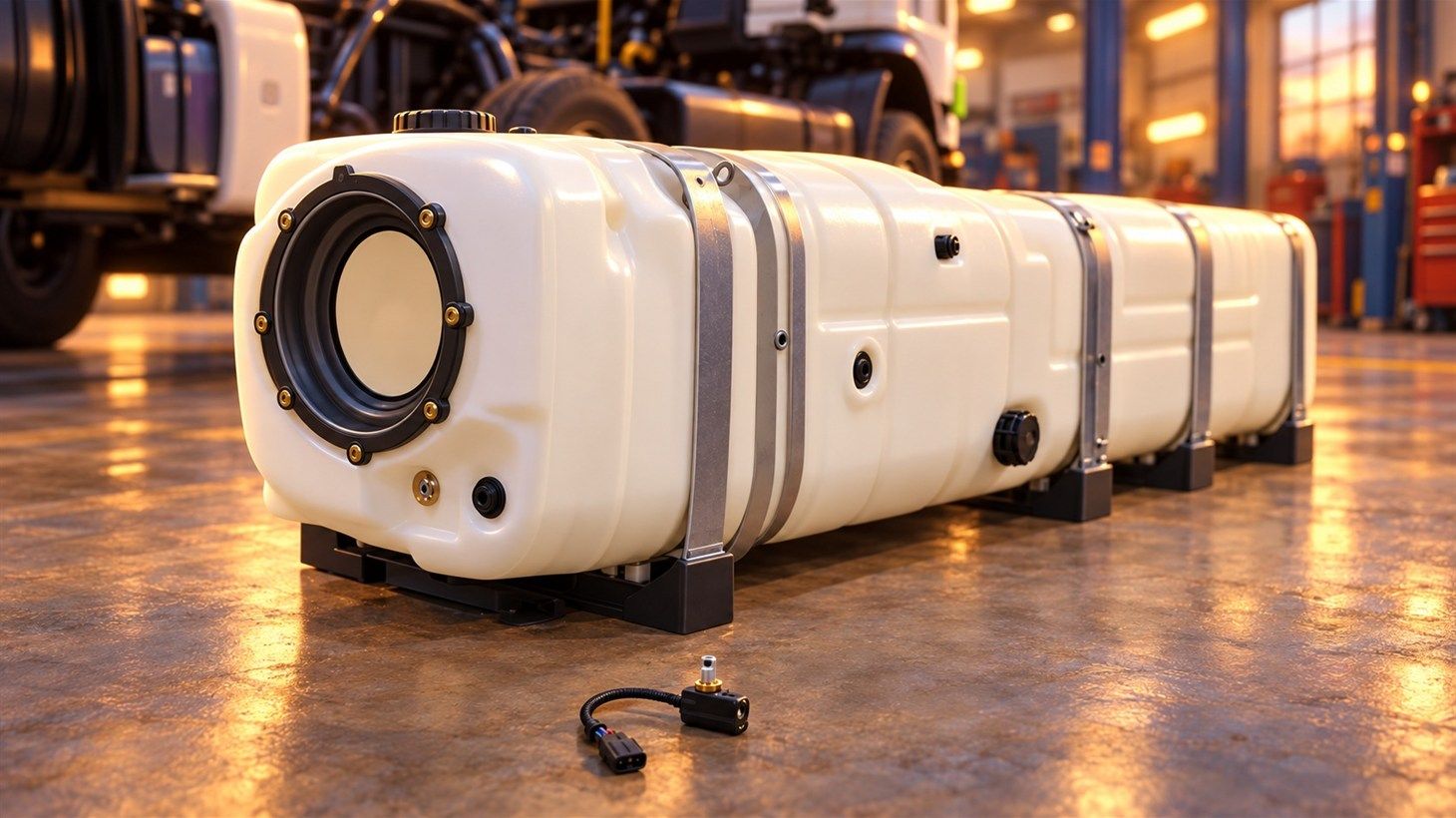
And you can't always just replace the header
This is the part that pushes owners over the edge. DEF sensors are often integrated into a single non-serviceable header unit inside the tank — when one sensor fails, the whole header goes, and on many models that includes the pump (Engineer Fix).
On some platforms it's worse: the header isn't sold separately at all and the fix is replacing the entire DEF tank assembly. On the L5P Duramax, a corroded level/temperature sensor inside the header meant full tank-assembly replacement, because the sensor wasn't serviced separately until 2024-and-later units (BS Built). Ram owners hit the same wall — dealers telling them the whole tank had to be replaced for one sensor, and the tank not stocked (Ram Heavy Duty Forum). It cuts the other direction too: on some platforms the header is an OEM-specific part not available through normal engine-maker parts channels at all (Cummins bulletin via NHTSA).
Once you're buying an assembly instead of a sensor, the number moves fast. Headers start over $500 and commonly run $700 to $1,400-plus (DuraWRX, First Truck Parts), and a John Deere DEF tank header assembly lists at $3,894.60 (Doggett Equipment). That's all before labor, tow, and the routes the truck missed.

Supply chain turned a nuisance into a crisis
None of this would sting so much if headers were on the shelf. For several years they weren't.
The semiconductor shortage hit DEF sensor suppliers directly, limiting their ability to deliver sensors even for unit-down situations (Fleet Equipment). DEF heads and NOx sensors were among the hardest emissions parts to source, with some OEM parts houses capped on how many of a part they could order at a time (CCJ). Thousands of trucks sat, and dealers quoted multi-week lead times (Transport Topics).
It got bad enough that OEMs had to work around the hardware entirely, releasing ECM calibrations that reduced inducement levels so trucks could keep running — explicitly because header replacement parts were not available (DTNA temporary repair practice via NHTSA, PACCAR temporary repair practice via NHTSA).
The economics in one line: during the shortages, a $300 sensor could sideline a $180,000 truck for weeks (FreightWaves). On a $350,000 refuse truck the math is uglier still — and if the header isn't separately serviceable, you're waiting on a whole tank assembly.
Availability has improved a lot since the peak, but unpredictability remains the defining challenge, with vendor reliability and pricing still moving around, especially on heavily tariffed components (Commercial Truck Trader).
Regulators are now removing the sensor
The pressure worked its way up to policy. In August 2025, EPA guidance softened the derate schedule: a DEF fault now means a warning light for 650 miles or 10 hours, then only a mild derate, with normal-speed operation for up to about 4,200 miles — roughly two work weeks — instead of dropping to 5 mph within hours (FreightWaves). Cummins and PACCAR pushed out calibrations raising final derate speed from 5 mph to 25 mph in certain conditions (Heavy Duty Trucking).
Then on March 27, 2026, EPA went after the component itself. Its guidance removes the DEF sensor requirement, letting manufacturers drop urea quality sensors in favor of NOx sensors that monitor the pollutant rather than the fluid, and confirms that approved NOx-based software updates can be installed on existing engines without counting as illegal tampering (EPA). EPA reached that decision after demanding failure data from manufacturers representing over 80% of DEF-system products, and its preliminary warranty review found DEF sensor failures to be a significant source of claims and inducements (EPA). Starting with model year 2027, new on-road diesels must be engineered to avoid sudden severe power loss after running out of DEF (EPA).
Be clear-eyed about the tradeoff: EPA acknowledges NOx sensors have detected poor DEF quality in many, but not all, dilution scenarios (Heavy Duty Trucking). Fewer nuisance derates, but less direct policing of what's in your tank — which means fluid discipline matters more, not less.

Diagnose before you buy
Run the sequence before you spend:
- Compare physical tank level to the gauge. Disagreement points at the sender; agreement means keep looking.
- Pull the codes. The code family narrows it to level, quality, temperature, or pressure.
- Test the fluid at 32.5% with a refractometer. Off-spec fluid explains a quality warning with no hardware failure at all.
- Inspect for crystals at the fill neck, header, and doser. White deposits mean the fluid side needs fixing regardless of which sensor died.
- Check the boring stuff. Spread or damaged pins at the sender connector, corrosion, water ingress, and loose wiring are all documented causes of these exact codes (Detroit procedure via NHTSA, Cummins/Pierce bulletin via NHTSA).
- Then buy the part.
Replacing a sensor without fixing the underlying fluid condition just schedules the next failure (NüDef).
Bottom line
Headers fail for reasons your shop can influence more than you'd think. Keep fluid in spec, keep it cool and sealed, cycle fresh fluid through trucks that sit, train drivers on the blue cap, and test before you throw parts at a code.
Because when it isn't a $500 part — when it's a non-serviceable assembly on backorder holding a $350,000 truck out of service — prevention is the only lever you actually control.
Part two of two. Part one covers DEF fluid quality, storage, and why cheap fluid ends up being the expensive option.
RDK Truck Sales — Tampa, Florida. Refuse truck sales, rentals, parts, and service. Whether it's one truck or a whole yard, if you're chasing repeat DEF codes, our service team can tell a real hardware failure from a fluid problem before you spend on parts.

DEF is 32.5% urea and 67.5% deionized water. Heat and time are what push it off spec, and off-spec fluid is what kills sensors, catalysts, and uptime.

One misfuelling mistake can destroy a $15,000 system. See the DEF filling, storage, and DPF maintenance procedures that protect from costly repairs.

DEF freezes at 12°F and hydraulic fluid thickens fast. See how extreme cold hits refuse trucks and get a pre-trip checklist to avoid breakdowns.